
Educated in a Modern Style
How William Orbit influenced my informal education fusing electronic music with my trained classical music.

News broke this week that William Orbit has died. His family confirmed he passed at home on July 23rd. This landed differently for me than most obituaries do. The tributes rolling out over the last few days trace the shape of a career most people only know through one door: Madonna.
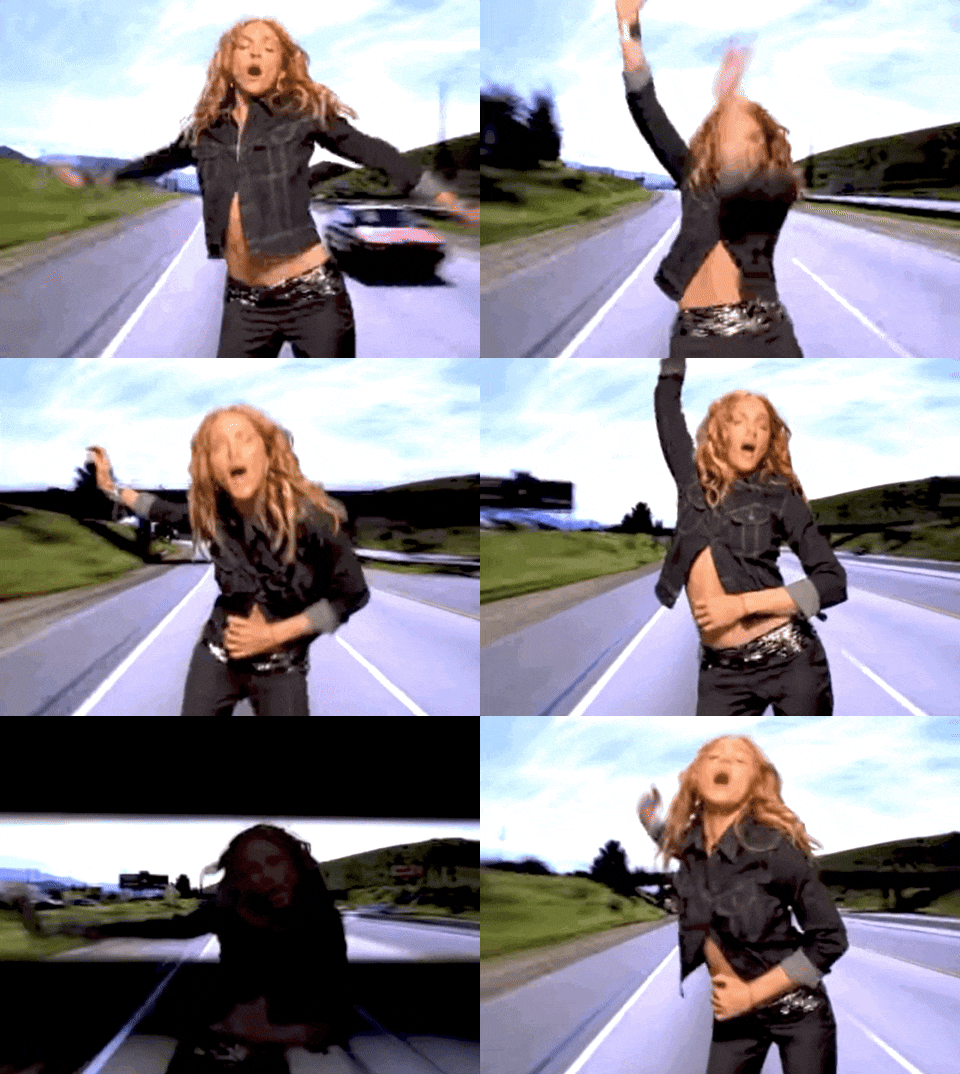
Most people met William Orbit through Ray of Light, and fair enough — the 1998 album is a hallmark of how far a pop star can push her own sound and still land at the center of the culture. Always at the center of club culture, with her legacy of advocacy for LGBT rights, Madonna’s album reaffirmed her status as Queen of Pop. Orbit produced it, and the shift in tone from what came before is unmistakable, even if you’re not listening for it.
But how many of us knew him beyond that record? I was a musical nerd who heard the difference in texture and approach and went looking for where it came from. What I found was a producer with roots in trance, electronic, and classical music — and an album called Pieces in a Modern Style.
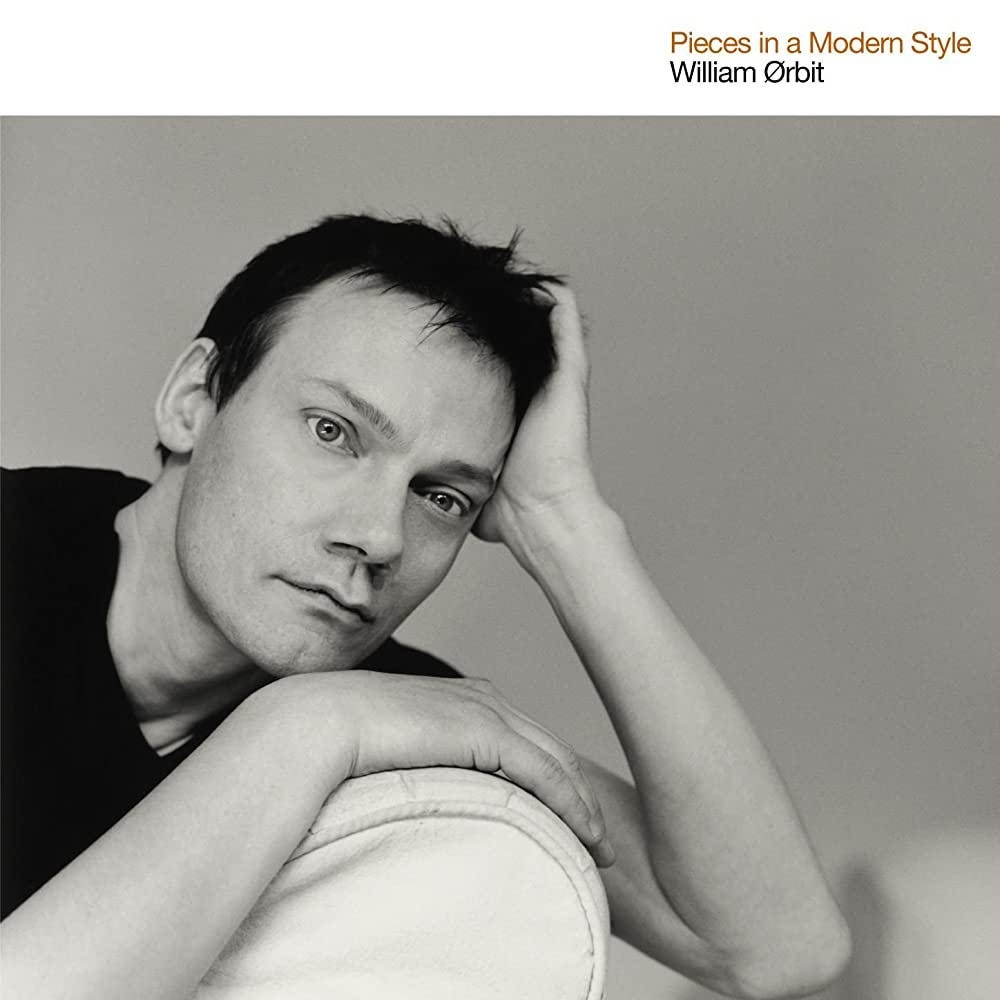
The record’s actual history is stranger and more interesting than the “Madonna’s producer moonlights in classical” version. Orbit first released it in 1995 on his own N-Gram label. That version barely existed, as it was almost immediately pulled from shelves after Arvo Pärt objected to Orbit’s treatment of two of his compositions. The album that most of the world knows didn’t arrive until 2000, reissued through Madonna’s Maverick label with the Pärt pieces swapped out for Beethoven, Vivaldi, Handel, and Mascagni. That’s the version that climbed the charts and became shorthand for what electronic-classical fusion could sound like.
I didn’t know any of that structural backstory when I was in undergrad. I just knew that 1995 and 2000 sat like bookends on either side of my formal education in Philadelphia — Pieces in a Modern Style on one end, Ray of Light somewhere in the middle of the shelf, and by the time I graduated, I understood Orbit’s catalog as a kind of private syllabus, running parallel to the one the university handed me.
That parallel syllabus is part of why I chose a university in a major city instead of a conservatory. I wanted the local culture and its noise to shape my education alongside the institutional pedagogy — not instead of it. Living in Philadelphia, I always presented myself as a “resident who’s currently studying music” rather than one just there for a finite duration. I wanted to be part of the community of the city and those who shaped the culture. I did stay in Philadelphia well beyond my graduation from my studies.
A university in a city hands you the craft training and then throws the whole civic ecosystem at you besides: opera companies, dance companies, benefit concerts, drag bars playing Björk next to jazz clubs playing Ellington. I wanted the friction.
Orbit’s connection to Samuel Barber is where all of this became personal instead of academic. His electronic rendition of the Adagio for Strings — released as the album’s lead single, though the version that actually got radio and TV play was a Ferry Corsten remix — is probably his single most recognizable piece of work outside the Madonna catalog.
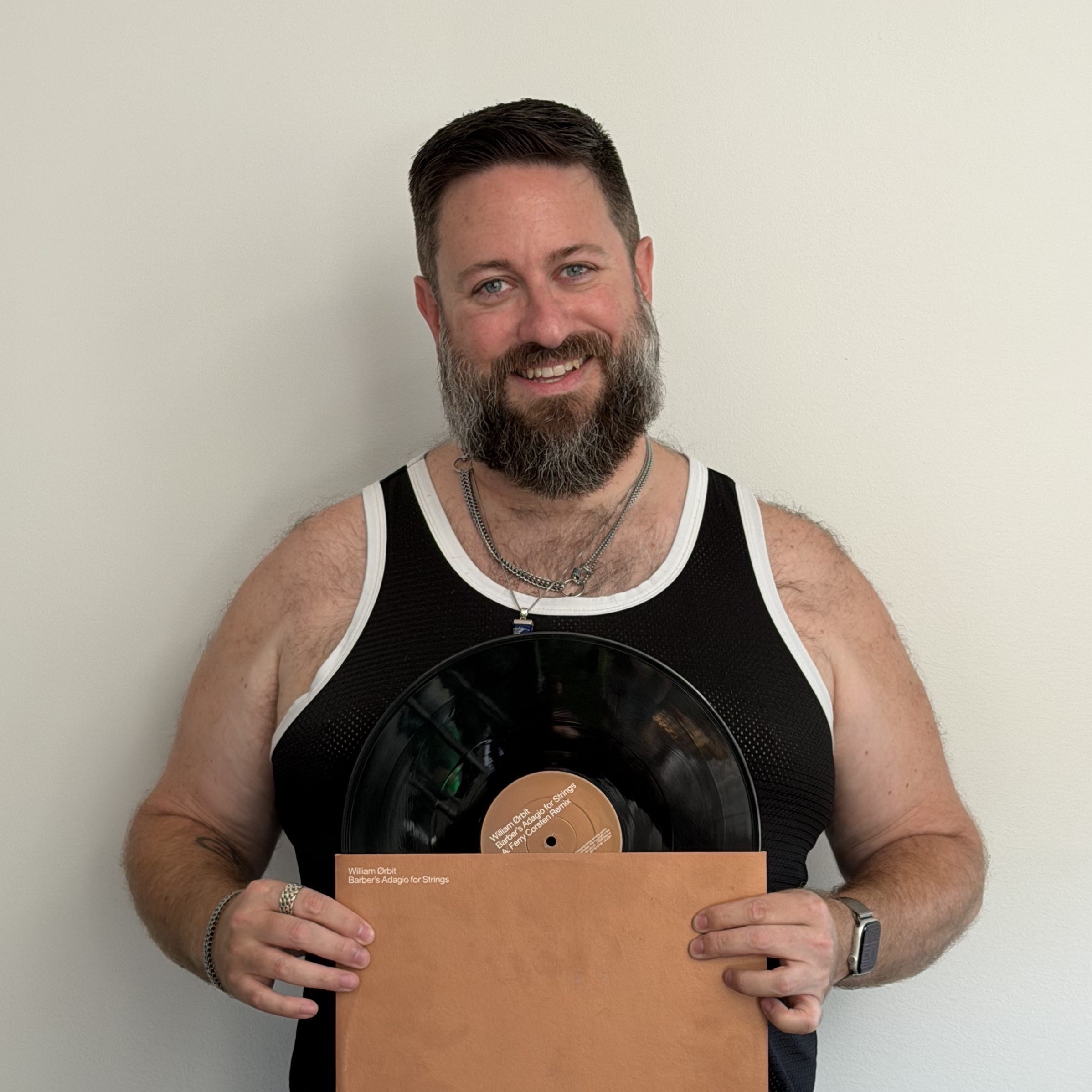
I was a chorister with the Opera Company of Philadelphia at the time, and our chorus master, Donald Nally, invited a group of us to sing at a one-night benefit called Shut Up and Dance — a fundraiser produced and performed entirely by dancers of the Pennsylvania Ballet on behalf of MANNA, the Metropolitan AIDS Neighborhood Nutrition Alliance. It’s where I first crossed paths with Matthew Neenan and Ian Hussey, two dancers I’d go on to know for years afterward — Neenan already building the choreographic voice that would eventually lead him to found BalletX, Hussey a few years away from becoming the benefit’s producing director himself.
We sang Barber’s Agnus Dei — the same Adagio melody, retexted for choir.
Barber himself trained at Curtis Institute of Music, a few blocks from where I was living and singing. We were never in Philadelphia at the same time, obviously, but there’s a cosmic something about working on piece in the same city where the composer lived that changes how you hold it.
Rehearsals were rehearsals.
But when we were at soundcheck
lined up against the back of the stage to give the dancers room,
and the piece started,
and dancers ran onstage in a circle
and began pulling each other down mid-jump,
one by one,
like a life cut short.
It didn’t take much imagination to know what that image was standing in for.
I was young. I remember understanding, maybe for the first time, that my voice wasn’t just an instrument for me — it was something I could hand to a room full of people who were actively grieving, actively trying to reconcile how a community absorbs a plague like that and keeps going. That’s not a lesson a conservatory curriculum was going to teach me on its own. That’s a lesson a city, a benefit concert, and a composers’ most famous piece of music taught me together.
William Orbit didn’t write the Adagio. He just heard something in it worth amplifying and handed it to a much bigger audience than Barber ever had in his lifetime. That’s most of what a producer does, honestly — and most of what I’ve tried to do since, in whatever room I happen to be standing in.
Further reading on Orbit’s late-career reappraisal: The Guardian and LA Times both ran strong retrospectives this week.
Another incredible piece. I always love the way you sew together the pieces, filling in the blanks of history we would never think to connect. But it was your final words that really stayed with me: a motto we should all aspire to live by.
Beautiful piece. Thank you.